
Means of Representation: Between Hand-Drawn Drawing and Artificial Intelligence
- Amanda Braga

- Dec 15, 2025
- 2 min read
The Representation Methods course this semester (2025.2) presented me with a simple yet profound question: how do we represent architectural ideas, and what does that say about the times we live in?
Throughout the semester, I learned to graphically represent architectural projects, understanding norms, techniques, scales, and conventions. But, beyond the technique, what resonated most with me was the reflection.


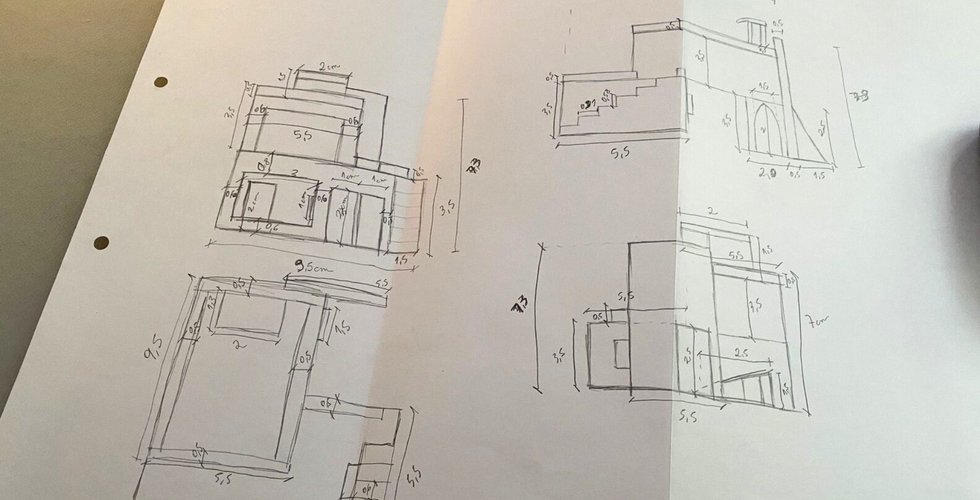
For centuries, architects represented everything by hand.
Each line, each shadow, each detail was the result of time, practice, and presence.
Thinking about this today, in the fast-paced world we live in, seems almost unimaginable.
The line as thought
Studying hand-drawn architecture, even knowing it's not the primary method used in today's market, made me realize something essential: hand drawing is not just representation, it's a thought process.
When we draw by hand, the body participates.
The gaze slows down.
The idea organizes itself before becoming form.
There is a direct relationship between mind, hand, and paper that no technology can completely replace.
Even though the market is digital, the line remains a fundamental language.
Technology, speed and new possibilities
Alongside my classes, I participated in two online immersion courses in architectural rendering with artificial intelligence, offered by @arqexpress and @lumehaus.3d. The experiences were fascinating.
AI expands possibilities, accelerates processes, and creates images with immediate visual impact.

It speaks directly to the world we live in today: fast-paced, visual, and competitive.
Seeing how technology transforms the way architecture is represented made me understand that there is no conflict between handmade and technological. There is complementarity.
Knowing how to use technology doesn't eliminate the need to know how to design.
The more I delved into this contrast, the clearer it became that using technology doesn't eliminate the importance of knowing how to represent things by hand.
On the contrary. Technology becomes much more powerful when there's a foundation. When the user understands space, proportion, light, materiality, and intention.
The risk isn't in using AI, software, or advanced rendering.
The risk lies in skipping steps.
Personal summary
Means of Representation taught me that representing architecture is, above all, communicating thought.
Tools change.
The world changes.
Technologies evolve.
But the ability to think, structure, and express an architectural idea remains central to everything.
Knowing how to draw by hand, even in a digital world, is an act of awareness. And knowing how to use technology without losing this fundamental skill is what makes an architect truly prepared for their time.


Comments